
Physiotherapy
Q: What kind of problems can a physiotherapist help with?
A: Read More
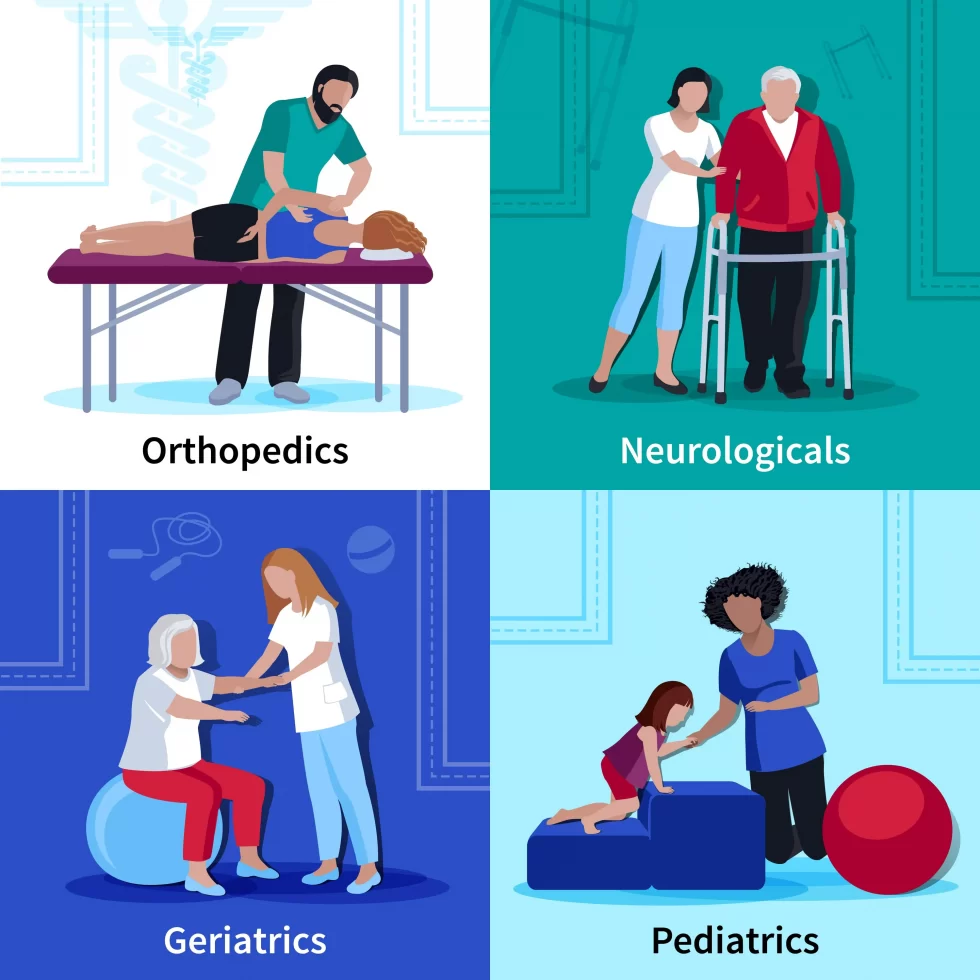
Physiotherapists help people recover from pain, injury, and movement problems affecting muscles, joints, and nerves.
At our physiotherapy centre, we help people of all ages recover from pain, injury, or movement limitations, and support return to daily and sports activities.
Common conditions we treat include:
- Spinal, joint, and muscle pain (e.g. weakness, strain, arthritis, disc herniation, scoliosis)
- Sports and work-related injuries (e.g. meniscus tears, tendon or ligament problems, overuse strain)
- Neurological and balance disorders (e.g. stroke, Parkinson’s disease, nerve weakness, BPPV)
- Pre and Post-surgical rehabilitation (e.g. joint replacement, spinal surgery, soft tissue repair)
- Children’s conditions (e.g. torticollis, cerebral palsy, developmental delay, flat feet, toe walking, gene-disorder related gross motor dysfunction )
Q: What services does our physiotherapy centre provide?
A: Read More
Our centre offers comprehensive physiotherapy services designed to relieve pain, restore movement, and support return to daily and sports activities.
We combine expert manual therapy with advanced rehabilitation technologies to deliver precise, evidence-based care.
Our key services include:
✅ Moti Physio 3D AI Posture Analysis – Provides accurate posture, muscle, and movement assessments.
✅ Musculoskeletal Ultrasound (MSK US) – Visualizes soft tissue, tendon, and muscle injuries in real time for accurate diagnosis and guided therapy.
✅ Neuro Activation Suspension Therapy – Engages deep stabilizing muscles to retrain core control, balance, and coordination.
✅ Whole Body Vibration Therapy (WBVT) – Activates fast- and slow-twitch muscle fibers to improve strength, stability, and performance.
✅ Decompression Traction System (DTS) – Relieves spinal pressure and supports recovery from disc-related pain.
✅ Ultrasound-Guided Extracorporeal Shockwave Therapy (ESWT) – Precisely targets injured tissues to stimulate healing and reduce chronic pain.
✅ EMS High Power Laser Therapy (HPLT) – Reduces inflammation, accelerates recovery, and relieves pain, especially in acute or subacute stages.
✅ Dry Needling – Releases muscle trigger points, reduces tension, and improves mobility.
✅ Kinesiology Taping – Supports joints and muscles, improves alignment, reduces strain, and enhances proprioception during recovery or sports activity.
✅ Interferential Current (IFC), Therapeutic Ultrasound & Ice pack Therapy – Relieve pain, decrease inflammation, and support tissue healing.
Difference Between Chiropractor and Physiotherapist
Q: What is the primary focus of a chiropractor versus a physiotherapist?
A: Read More
Chiropractors and physiotherapists both aim to reduce pain and improve how your body moves, but they approach it differently.
- Chiropractors mainly focus on the spine and joint alignment. They often use manual adjustments or manipulations to improve joint movement and relieve discomfort.
- Physiotherapists, on the other hand, focus on restoring how your muscles, nerves, and joints work together. Treatment doesn’t just address the pain—it helps you regain strength, coordination, and proper movement patterns. Physiotherapists often combine hands-on therapy with personalized exercise programs to help you move better, stay active, and prevent future problems.

Moti Physio 3D AI Posture Analysis
Q: What is Moti Physio 3D AI Posture Analysis?
A: Read More
Moti Physio is an advanced, AI-based posture and musculoskeletal assessment system that provides fast, accurate insights into your body’s alignment, muscle balance, and movement control
How does it work?
➡️ Uses RGB-D cameras and AI algorithms to scan the body in just 30 seconds
➡️ Generates a 3D skeletal and muscle model for detailed visualization
➡️ Evaluates 87 muscles to identify areas of tightness and weakness, drawing from Janda’s methodology, Anatomy Trains, and modern physiotherapy concepts
➡️ Detects postural asymmetry, imbalance, and compensatory patterns
What are the benefits?
✔️ Fast, safe, and radiation-free
✔️ Accurately detects muscle imbalance and postural issues
✔️ Supports personalized rehabilitation, injury prevention, and performance optimization
✔️ Provides visual, easy-to-understand reports for patient education and progress tracking
Who uses it?
Trusted by clinics, hospitals, universities, and sports teams in 70+ countries and over 2,200 centers worldwide — Moti Physio is becoming the global standard in posture and movement analysis.
Q: What makes Moti Physio different from traditional posture assessment?
Unlike visual observation or manual assessment, Moti Physio offers:
- Objective, AI-based data (no human bias)
- 3D accuracy within millimeters
- Quick report generation (in less than 5 minutes)
- Progress tracking with clear visual comparison before and after treatment
Q: Is the assessment safe and comfortable?
Yes! The test is completely safe, painless, and non-invasive — no radiation or sensors attached to the body. You simply stand and move naturally while the system captures your posture and movement in 3D.
Neuro Activation Suspension Therapy
Q: What is Neuro Activation Suspension Therapy?
A: Read More
Neuro Activation Suspension Therapy is an advanced neuromuscular activation system that helps the body regain proper muscle coordination, control, and stability.
It uses adjustable slings and elastic cords to create controlled instability, encouraging the body to reactivate deep stabilizing muscles that often “switch off” after pain or injury — muscles that are difficult to engage through traditional exercise.
Because it involves closed-chain core exercises, this therapy activates multiple muscles along a functional kinetic chain, improving stability, posture, and movement efficiency.
Every movement, such as walking, requires precise teamwork between stabilizing, agonist, and antagonist muscles. When some muscles fail to activate properly, others overwork to compensate, leading to imbalance, tension, or pain.
At our centre, we use this therapy to identify weak links in your movement chains or fascial lines — areas where stabilizing muscles or inter-core connections are inactive or weak. The therapy then focuses on re-educating the neuromuscular system by restoring the connection between the brain, movement receptors, and muscles, teaching them to work together as a coordinated unit rather than in isolation.
This results in improved activation, coordination, and pain-free function. It has shown excellent results for chronic and acute pain, and for athletes returning to performance—often with noticeable improvement after just a few sessions.


Whole Body Vibration Therapy (WBVT)
Q: What is Whole Body Vibration Therapy (WBVT)?
Whole Body Vibration Therapy (WBVT) is a scientifically supported rehabilitation method that delivers harmonic (sinusoidal) vibrations through a platform to stimulate muscles, tendons, joints, and the nervous system.
The vibration frequency (typically 30–50 Hz) and amplitude (low: 2 cm, high: 4 cm) remain constant, producing 80% vertical and 20% multi-directional (front-back and side-to-side) movement. This controlled mechanical stimulation provides consistent, predictable, and safe neuromuscular activation, engaging both fast-twitch and slow-twitch muscle fibers.
⚙️ How It Works
WBVT triggers reflex muscle contractions through the Tonic Vibration Reflex (TVR) and proprioceptive receptor activation, creating a unique combination of neuromuscular, sensory, and circulatory benefits.
💪 Clinical Benefits
✅ Strengthens deep stabilizers
✅ Improves balance and coordination
✅ Reduces spasticity and muscle tone
✅ Boosts circulation and lymphatic drainage
✅ Enhances neuromuscular readiness and movement efficiency
Q: Can Whole Body Vibration Therapy (WBVT) help children with Cerebral Palsy (CP)?
Yes. Whole Body Vibration Therapy (WBVT) is a safe and effective physiotherapy technique that delivers gentle vibrations through a platform to activate muscles and improve movement control.
For children with CP, it helps enhance muscle strength, balance, coordination, and posture — key elements for better daily function and independence.
The vibration stimulates muscle spindles and sensory receptors, causing small, reflexive muscle contractions known as the Tonic Vibration Reflex (TVR). This response helps “wake up” weak or underused muscles while relaxing overly tight or spastic ones.
Research shows that when WBVT is combined with physiotherapy, it can:
✅ Increase muscle strength – especially in the legs, improving standing, walking, and stability.
✅ Reduce spasticity – helps relax tight muscles
✅ Improve walking ability – enhances gait speed, stability, and endurance.
✅ Enhance balance and posture – strengthens trunk control and body awareness.
✅ Boost coordination and motor control – promotes smoother, more efficient movements.
In short, WBVT helps children with CP move with greater ease, confidence, and control — making it an excellent complement to traditional physiotherapy.
Q: Who should not use Whole Body Vibration Therapy (WBVT)?
Whole Body Vibration Therapy (WBVT) is generally safe. However, certain health conditions may make it unsuitable or require extra care and medical clearance.
These include:
🚫 Recent fractures, bone injuries, or surgical implants
🚫 Severe osteoporosis or bone fragility
🚫 Deep vein thrombosis (DVT), thrombophlebitis, or vascular problems
🚫 Severe heart disease or uncontrolled high blood pressure
🚫 Pacemaker or other implanted medical/electronic devices
🚫 Active inflammation, infection, or open wounds
🚫 Pregnancy
🚫 Severe diabetes with nerve damage (neuropathy)
🚫 Kidney or gallstones
🚫 Severe migraine, vertigo, or balance disorders
🚫 Active cancer or bone metastasis
Q: How does Power Plate differ from other vibration platforms?
Here’s a clear breakdown of how they compare:
📌 Key take-aways:
- Power Plate’s advanced tri-planar vibration engages deeper muscles, making it particularly effective for rehab and sport performance.


Musculoskeletal Ultrasound (MSK US)
Q: What is Musculoskeletal Ultrasound (MSK US)?
A: Read More
Musculoskeletal Ultrasound (MSK US) is a safe, non-invasive imaging technique that uses high-frequency sound waves to create real-time images of muscles, tendons, ligaments, joints, and soft tissues.
Unlike X-rays or MRI, MSK ultrasound is radiation-free, dynamic, and can visualize movement in real time, making it ideal for assessing injuries as they occur during motion.
It helps physiotherapists and clinicians:
✔️ Detect muscle, tendon, and ligament tears
✔️ Identify inflammation, fluid, or calcifications
✔️ Guide precise treatment — such as injections or shockwave therapy
✔️ Monitor tissue healing and treatment progress
MSK ultrasound provides a clear, live look inside the body — enhancing both diagnosis accuracy and treatment effectiveness.
Q: What is an advantage of Musculoskeletal Ultrasound (MSK US) compared to MRI or X-ray?
Musculoskeletal Ultrasound offers several unique advantages over MRI and X-ray imaging:
| Feature | MSK Ultrasound | MRI | X-ray |
| Radiation-Free | ✅ Yes | ✅ Yes | ❌ Uses ionizing radiation |
| Real-Time Imaging | ✅ Dynamic — can observe muscles, tendons, and joints in motion | ❌ Static images only | ❌ Static images only |
| Soft Tissue Detail | Excellent for tendons, ligaments, and muscles | Excellent for deeper structures | Poor for soft tissues |
| Cost & Accessibility | Affordable and portable | Expensive, limited access | Widely available but limited scope |
| Guided Procedures | ✅ Ideal for guided injections, aspirations, and therapy | Occasionally | ❌ No |
| Patient Comfort | Quick, comfortable, no enclosed space | May be lengthy and claustrophobic | Quick, but limited information |
Ultrasound-Guided Extracorporeal Shockwave Therapy (ESWT)
Q: What is Ultrasound-Guided Extracorporeal Shockwave Therapy (ESWT)?
Ultrasound-Guided ESWT is an advanced, non-surgical treatment that uses high-intensity pressure waves to stimulate the body’s natural healing process and repair damaged tissues — without injections, medication, or surgery.
Shock waves are powerful pressure movements—similar to those produced by an explosion, earthquake, or a plane breaking the sound barrier—applied safely in medicine to treat chronic pain and musculoskeletal injuries.
With real-time musculoskeletal ultrasound guidance, our physiotherapists can accurately locate the injured tissue and direct the shockwaves precisely, ensuring safe, focused, and effective treatment.
ESWT is highly effective for plantar fasciitis, tennis elbow, rotator cuff tendinopathy, Achilles tendinitis, jumper’s knee, chronic muscle or fascial tightness and more!
ESWT works through two key mechanisms:
- Direct shockwave impact - trigger new tissue and bone formation.
- Cavitation effect - stimulate cellular repair, enhance blood vessel growth, and accelerate pain relief and healing.
Together, these effects activate powerful biological responses:
✅ Reduce pain
✅ Decreases inflammatory response
✅ Promote tissue regeneration
✅ Increases blood circulation
✅ Breaks down calcifications
✅ Stimulates collagen production
✅ Speeds up the overall healing process
Q: Who should NOT receive ESWT? (Contraindications)
While Extracorporeal Shockwave Therapy (ESWT) is generally safe and effective, certain conditions make it unsuitable or require special caution.
❌ Absolute Contraindications
ESWT should not be performed in the following cases:
- Pregnancy
- Active infection or osteomyelitis
- Malignant tumor in the treatment area
- Over major blood vessels, nerves, or open wounds
- Pacemakers or implanted electronic devices
- Over joint replacements or metallic implants
- Active thrombosis or blood clotting disorders
- Epiphyseal (growth) plates in children/adolescents
⚠️ Relative Contraindications (Require Caution)
should be used with caution in cases of:
- Coagulopathy or ongoing anticoagulant therapy (e.g., Warfarin use)
- Recent corticosteroid injection in the treatment area
- Lung or pleura within treatment focus (e.g., upper ribs)
- Brain or spinal cord tissue near treatment site
- Current use of NSAID
- Impaired cognition or inability to communicate pain/discomfort
Q: Can patients take painkillers before ESWT?
A: Read More
It is generally not recommended to take non-steroidal anti-inflammatory drugs (NSAIDs) (e.g., ibuprofen, naproxen, aspirin) before treatment.
🔹 NSAIDs reduce inflammation, which is a key part of the healing process triggered by ESWT.
🔹 Using NSAIDs before treatment may reduce ESWT’s effectiveness.
Q: Can I have Shockwave Therapy after getting a steroid injection?
A: Read More
Yes, but it’s important to wait about 6 weeks after the injection before starting treatment. This gives your tissues time to heal safely.
Q: What’s the Best combination treatment to make ESWT more effective and comfortable?
For optimal results, ESWT often requires higher energy levels (EFDs). However, these can be painful and may limit how much energy can be safely applied.
While local anesthesia can reduce discomfort, it also blocks the nerve responses essential for ESWT’s healing effects — reducing its overall effectiveness.
Using our EMS High Power Laser Therapy(HPLT) before ESWT enhances both comfort and therapeutic outcomes.
HPLT works by:
✅ Rapidly reducing pain
✅ Lowering inflammation
✅ Improving circulation
Applying HPLT before ESWT allows patients to tolerate higher therapeutic doses without anesthesia:
🔹 Up to 50% more ESWT energy tolerated after 5 minutes of HPL
🔹 Up to 100% more energy tolerated with a 1-hour interval
This means a pain-free, biologically effective ESWT session — maintaining its full healing response while improving comfort.
Clinical Advantages
✅ Greater comfort — less pain, no need for anesthesia
✅ Stronger biological response — enhanced tissue repair and regeneration
✅ Fewer sessions — faster recovery
✅ Higher patient satisfaction — better outcomes and compliance
EMS High Power Laser Therapy (HPLT)
Q: What is EMS High Power Laser Therapy (HPLT)?
A:Read More
EMS High Power Laser Therapy (HPLT) is a next-generation treatment that uses powerful laser light and electromagnetic stimulation to accelerate your body’s natural healing process. It provides immediate pain relief, reduces inflammation, and promotes tissue regeneration — safely and effectively. This advanced form of photobiomodulation (PBM) delivers high-intensity laser light deep into the tissues to stimulate cellular repair and improve circulation — without the use of drugs, injections, or surgery. Our EMS HPLT system uses a 905 nm wavelength — clinically proven for deep tissue penetration and rapid pain relief. At the cellular level, laser light is absorbed by the mitochondria, increasing ATP production (cell energy) to accelerate repair and regeneration — without side effects or medication dependency. ✅ Fast pain relief
How Does It Work?
It combines:
Clinical Benefits
✅ Reduced inflammation
✅ Accelerated tissue healing
✅ Improved mobility & recovery — ideal for both acute and chronic injuries.
✅ Safe and non-invasive — no burns, no discomfort, no downtime.
Q: How is HPLT different from low-level laser therapy (LLLT)?
Both HPLT and LLLT use light energy to promote healing, but they differ greatly in power, depth, and results.
🔹 Power & Penetration:
- HPLT delivers much higher peak power — up to 300 watts, which is about 15 times stronger than conventional low-level lasers.
- This allows it to reach deep tissues like muscles, tendons, and joints that LLLT often cannot access effectively.
🔹 Speed & Effectiveness:
- HPLT provides faster pain relief — often within minutes
- LLLT is gentler but usually requires more sessions for noticeable effects.
🔹 Mechanism & Safety:
- Our HPLT uses short, controlled pulses (100 ns) to avoid overheating while still delivering deep energy for tissue repair.
- It stimulates cellular energy (ATP) production, improves blood flow, and enhances regeneration — similar to LLLT but more efficient and targeted.
- Both are non-invasive and safe, but HPLT achieves faster, longer-lasting results for acute and chronic pain.
In summary:
👉 HPLT is ideal for deeper, more stubborn pain or inflammation — offering faster relief and stronger healing effects.
Q: Is HPLT safe?
Yes — HPLT is very safe.
Our EMS High Power Laser system is built with advanced safety features to protect your skin, eyes, and tissues during every session.
It delivers energy in ultra-short pulses (100 nanoseconds), keeping tissue temperature below the thermal threshold — ensuring no risk of burns or overheating.
The wide laser beam allows smooth, even energy delivery for maximum comfort and effectiveness.
Eye protection is always used during the session to ensure complete safety for both patient and therapist.
HPLT is non-invasive, drug-free, and radiation-free, making it safe for most patients with acute or chronic pain.
When applied correctly, it provides fast pain relief and deep tissue healing — safely and without side effects.
Q: Who is not suitable for High Power Laser Therapy (HPLT)?
A:
🚫 Avoid Treatment If You Have:
- Active cancer or tumor
- Pregnancy (abdomen or lower back)
- Bleeding or blood disorders
- Active infection or tuberculosis
- Pacemaker or implanted device (near site)
- Thrombosis or severe vascular disease
- Photosensitive skin or medications
- Over thyroid gland or eyes 👁️ (eye protection always used)
- Recent radiotherapy at the site
- Epiphyseal (growth) plates in children
⚠️ Use with Caution If You Have:
- Reduced sensation or neuropathy
- Severe cardiovascular disease or hypertension
- Recent steroid injection (within 7–10 days)
- Epilepsy or seizure disorders
- Fever or systemic infection
Q: Can HPLT be combined with other therapies?
Absolutely. HPLT can be safely and effectively combined with:
- Extracorporeal Shockwave Therapy (ESWT) – enhances pain tolerance and healing
- Manual therapy and exercise – improves mobility and strength
This combination approach enhances treatment outcomes and speeds up recovery.
Decompression Traction System (DTS)
Q: What is spinal decompression traction system?
A: Read More
The Spinal Decompression Traction System (DTS) is a non-surgical therapy designed to relieve pressure on the spine and support natural disc healing.
During treatment, you’ll lie comfortably on a specialized decompression bed while the DTS system performs precise, rhythmic movements to unload and elongate the spine.
It works by:
✅ Applying controlled decompression forces to reduce pressure on the spinal discs
✅ Creating negative pressure within the discs, producing a gentle vacuum effect that helps draw bulging or herniated disc material back into place so it can rehydrate and heal
✅ Relieving nerve compression by increasing the space between vertebrae
✅ Using a customized max–min traction cycle based on your body weight, which alternates between pulling, holding, and relaxing to create a pumping effect that improves blood flow, oxygenation, and nutrient delivery to spinal tissues
It’s a safe, painless, and effective approach for disc herniation, sciatica, spinal stenosis, and degenerative disc disease, helping restore movement and relieve pain without surgery.
Q: Who can benefit from the Spinal Decompression Traction System (DTS)?
A: Read More
The Spinal Decompression Traction System is suitable for people experiencing back or neck pain caused by disc and spinal problems. It can help relieve pressure, reduce pain, and promote natural healing in conditions such as:
✅ Herniated or bulging discs
✅ Degenerative disc diseases – including spondylosis, spondylolisthesis, and spondylolysis
✅ Sciatica – pain, numbness, or tingling radiating from the lower back down the leg
✅ Acute or chronic back and neck pain
✅ Post-surgical recovery (only after healing and specialist clearance)– such as after minimally invasive spine surgery (MISS), discectomy, or laminectomy
Q: Who is not suitable for Spinal Decompression Traction Therapy (DTS)?
A:
While DTS is a safe and effective non-surgical treatment for many spinal conditions, it may not be suitable for certain individuals.
Absolute Contraindications
These are cases where DTS should not be performed:
- Pregnancy
- Spinal fusion with metallic instrumentation (rods, screws, cages, etc.)
- Unstable spinal conditions (e.g. unstable spondylolisthesis, recent vertebral fracture, bilateral pars defect)
- Severe osteoporosis
- Spinal infections (osteomyelitis, discitis, meningitis)
- Spinal, abdominal or pelvic malignancy (primary or metastatic)
- Aortic or abdominal aneurysm
- Cauda equina syndrome or severe spinal cord compression
- Recent spinal surgery (within 3–6 months or as advised by surgeon)
- Vertebral-basilar artery insufficiency (VBI) or carotid artery disease
- Severe cardiovascular instability or uncontrolled hypertension
- Disc sequestration
- Acute inflammatory joint disease (e.g. rheumatoid arthritis in acute flare-up)
- Acute trauma (e.g. fracture, whiplash, post-accident cases)
Relative Contraindications
May proceed with caution or under specialist clearance:
- Post-surgical patients (discectomy, laminectomy, fusion — only after healing and clearance)
- Severe peripheral neuropathy with impaired sensation
- Hemiplegia or paraplegia (depends on stability, tone, and control)
- Cognitive impairment (if unable to communicate or follow safety cues)
- Advanced disc sequestration (free fragment not contained by annulus)
- Severe obesity (if exceeding traction system weight limit)
- Severe anxiety or intolerance to traction positioning
Q: Why do we use IFC and ice pack therapy after DTS?
After Spinal Decompression Traction (DTS), some patients may experience mild muscle soreness or temporary inflammation due to the unloading and elongation of the spine.
We use Interferential Current (IFC) therapy and ice packs alongside DTS to provide a comprehensive pain relief strategy:
- Ice Pack:
- Cools the affected area, reducing inflammation and swelling.
- Temporarily numbs pain receptors, giving immediate, short-term relief.
- Interferential Current (IFC) Therapy:
- Uses mild electrical currents to stimulate nerves and muscles.
- Helps relax tight muscles, block pain signals, and improve blood flow, providing deeper, longer-lasting relief.
Using them together — DTS to treat the source, IFC to relax muscles, and ice to reduce inflammation — helps your body recover more efficiently, allowing you to move comfortably and safely while benefiting fully from spinal decompression therapy.
Interferential Current (IFC)
Q: What is Interferential Current Therapy (IFC), and how does it work?
Interferential Current Therapy (IFC) is a type of electrotherapy that uses two medium-frequency electrical currents which intersect in the body to produce a low-frequency therapeutic effect deep in the tissues.
Traditional low-frequency currents can be effective for pain relief but are often uncomfortable. IFC delivers the same low-frequency benefits while using medium-frequency currents, making the therapy more comfortable and tolerable for patients.
IFC helps by:
✅ Relaxing tight muscles
✅ Reducing pain
✅ Decreasing inflammation
✅ Improving blood circulation to support faster recovery
It is a safe, non-invasive therapy commonly used to relieve pain, improve muscle function, and support recovery from musculoskeletal injuries.
Q: Who should avoid IFC therapy?
While IFC therapy is generally safe, it may not be suitable for everyone. Contraindications include:
🚫 Pregnancy (especially abdominal or lower back areas)
🚫 Pacemakers or implanted electrical devices
🚫 Severe heart conditions
🚫 Active cancer or tumors in the treatment area
🚫 Skin infections, open wounds, or rashes where electrodes are applied
🚫 Severe sensory or cognitive impairments that prevent communication or feedback
🚫 Epilepsy (caution, especially for head or neck treatment)
Ice Pack Therapy
Q: How does Ice Pack Therapy work?
Ice Pack Therapy cools the affected area to reduce pain, inflammation, and swelling. It works by:
✅ Constraining blood vessels to control swelling
✅ Numbing pain receptors for immediate relief
✅ Slowing tissue metabolism to prevent further damage
✅ Relaxing overactive muscles and nerves
During treatment, your body undergoes the Lewis-Hunting Reaction, a natural cycle of alternating vasoconstriction and vasodilation. The vasodilation phase occurs approximately 5–10 minutes after initial cold exposure and may last about 15 minutes, increasing blood flow to protect tissues. This cycle then repeats, ensuring both safety and effective cooling of the area.
Duration guidance: Ice should typically be applied for 10–20 minutes per session. Longer exposure may cause discomfort or skin irritation due to prolonged vasoconstriction.
Q: When should I use Hot Pack therapy and when should I use Ice Pack therapy?
| Feature | Ice Pack (Cold Therapy / Cryotherapy) | Hot Pack (Heat Therapy / Thermotherapy) |
| Purpose | Reduce acute pain, inflammation, and swelling | Relieve chronic stiffness, relax tight muscles, and improve flexibility |
| Mechanism | Constricts blood vessels, slows metabolism in tissues, numbs nerve endings | Dilates blood vessels, increases blood flow, warms tissues, relaxes muscles |
| Best For | Acute injuries: sprains, strains, bruises | Chronic conditions: tight muscles, joint stiffness, muscle spasms |
| When to Apply | Immediately after injury or exercise, post-therapy for soreness | Before exercise or therapy, for warming up tight areas, chronic pain relief |
| Effect on Pain | Blocks pain signals, provides temporary relief | Relieves pain by loosening muscles and improving circulation |
| Effect on Tissue | Decreases tissue metabolism, reduces swelling | Increases tissue elasticity, improves oxygen and nutrient delivery |
| Duration of Application | 10–20 minutes per session, avoid direct skin contact | 15–30 minutes per session, avoid excessive heat to prevent burns |
| Precautions | Not for poor circulation, Raynaud’s disease, or open wounds | Not for acute injury, inflamed areas, or skin sensitivity |
Q: Who should avoid or be cautious with Cryotherapy (Ice Pack Therapy)?
Cryotherapy is generally safe, but certain conditions require avoidance or special caution to prevent complications.
Contraindications – Do NOT use cryotherapy if you have:
🚫 Complex Regional Pain Syndrome (CRPS)
🚫 Hemoglobinuria
🚫 Cryoglobulinemia
🚫 Peripheral vascular disease or impaired circulation
🚫 Raynaud’s disease
🚫 Urticaria or hypersensitivity to cold
🚫 Skin anesthesia
🚫 Over regenerating peripheral nerves
🚫 Open wounds
Precautions – Use cryotherapy carefully if you have:
⚠ Over a superficial nerve
⚠ Hypertension
⚠ Impaired cognition
⚠ Very young or elderly patients
Dry Needling
Q: What is Dry Needling, and how does it work?
Dry Needling is a modern physiotherapy technique that uses very fine, sterile needles to target tight muscle knots known as myofascial trigger points — areas that can cause pain, stiffness, or restricted movement.
How it works:
- The needle is inserted directly into the tight muscle or trigger point.
- This stimulates a brief, involuntary muscle twitch — a sign that the tension is released.
- The body responds by increasing blood flow, reducing local inflammation, and resetting nerve-muscle communication.
Benefits:
✅ Reduces muscle tightness and spasm
✅ Decreases pain and referred pain patterns
✅ Improves mobility and flexibility
✅ Enhances recovery and performance
Dry Needling is commonly used for conditions such as neck and shoulder pain, back pain, headaches, sports injuries, and postural tension.
Q: How is Dry Needling different from Acupuncture?
Although both use fine needles, Dry Needling and Acupuncture are based on completely different principles.
- Dry Needling is a modern, science-based physiotherapy technique rooted in anatomy and neuroscience. It targets tight muscles and trigger points to relieve pain and improve movement.
- Acupuncture is rooted in Traditional Chinese Medicine (TCM) and aims to balance the body’s energy flow, or Qi, through specific meridian points.
In short — Dry Needling focuses on muscle release and neuromuscular function, while Acupuncture focuses on energy balance and overall wellness.
Q: What are the Contraindications for Dry Needling?
A:
🚫 Avoid Dry Needling if you have:
❌ Bleeding disorders or having blood-thinning medication
❌ Pregnancy (especially over the abdomen).
❌ Severe needle phobia or anxiety.
❌ Local infection or open wounds
❌Compromised immune system
❌Epilepsy
❌ Lymphedema or poor circulation
❌ Fever or systemic infection
Kinesiology Taping
Q: What is Kinesiology Taping?
Kinesiology Taping (often called K-Taping) is a therapeutic taping method that uses a special elastic tape to support muscles, joints, and fascia — without restricting natural movement.
Unlike rigid athletic tape, kinesiology tape mimics the skin’s elasticity, allowing full range of motion while providing gentle, continuous stimulation to the skin and underlying tissues.
How It Works: The Key Mechanisms
🧠 Nervous System: The tape sends sensory signals to the brain, helping to reduce pain and improve muscle control.
🩹 Skin: It gently lifts the skin, reducing pressure and stimulating mechanoreceptors that improve pain and movement.
🧬 Fascia: It helps release tension in the fascia, improving tissue glide and flexibility.
💧 Circulation & Lymphatics: The lifting effect improves blood and lymphatic flow, reducing swelling and inflammation.
💪 Key Benefits
✅ Reduces pain and swelling
✅ Supports muscles and joints
✅ Improves movement and posture
✅ Enhances circulation and recovery
✅ Promotes body awareness and control
Common uses:
- Muscle strain or tension
- Ligament sprains
- Joint instability
- Swelling or bruising
- Postural correction
- Sports performance and recovery
Kinesiology taping is safe, comfortable, and effective — whether for recovery, pain relief, or performance enhancement.
Q: Who Should Not Receive Kinesiology Taping? (Contraindications)
Kinesiology Taping should not be applied over or near the following conditions:
- Malignancy (cancerous area)
- Active infection or cellulitis
- Open wounds or broken skin
- Deep vein thrombosis (DVT)
- Known allergic reaction to Kinesio Tape
Use caution before applying if you have:
- Diabetes
- Congestive Heart Failure (CHF)
- Kidney disease or receiving dialysis
- Organ transplants
- Pregnancy
Q: Can I bathe with kinesiology taping, and how long can it stay on?
Yes, you can! Kinesiology tape is water-resistant, so you can bathe, shower, or even swim while wearing it.
However, keep these tips in mind:
- 🚿 Pat dry gently with a towel — don’t rub the tape.
- 🧴 Avoid applying lotions or oils on or near the tape, as they can loosen the adhesive.
- 🌊 If the edges start to peel, trim them slightly rather than pulling the tape off.
With proper care, the tape can typically stay on for 3–5 days while maintaining its therapeutic effect.